Rollout Inline Maps & Park Features
How to read the three Early Access maps and practice the right lines on each.
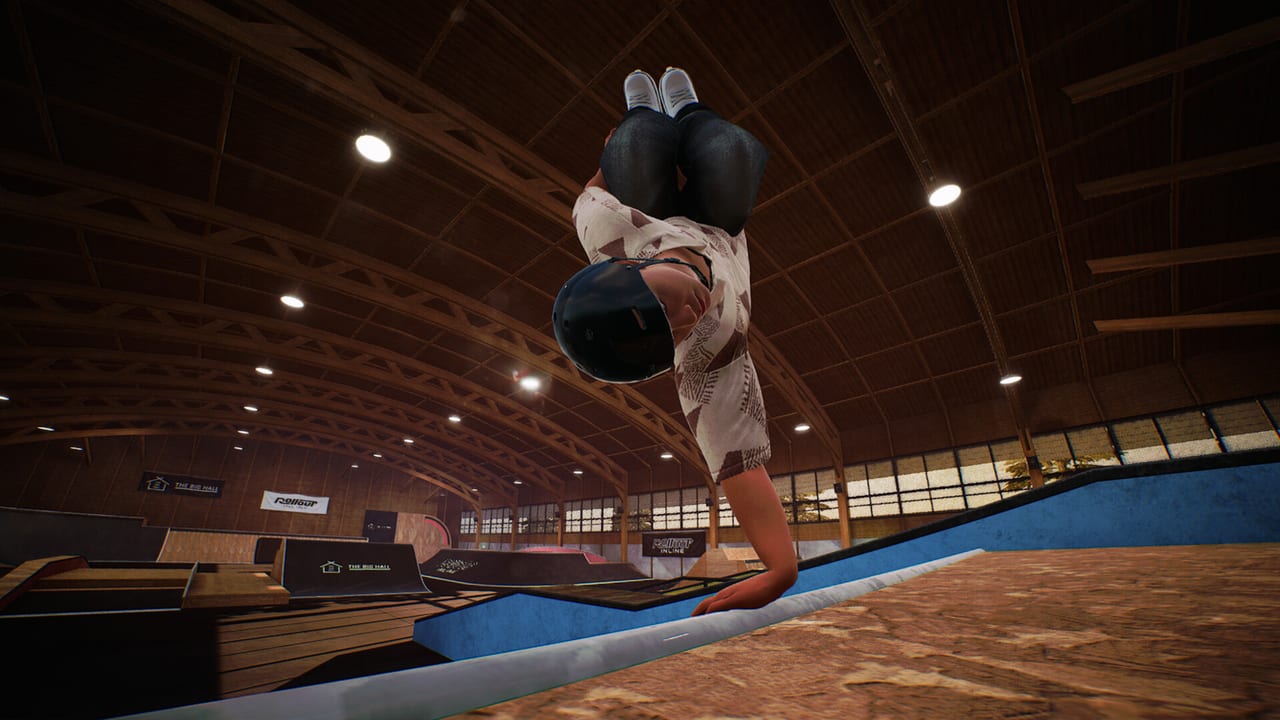
Rollout Inline launches into Steam Early Access with three maps. Official materials highlight massive gaps, long rails, vert ramps, pools, and more—the classic aggressive-park vocabulary—wrapped in a single-player challenge and progression loop. This overview teaches you how to scout those spaces, match them to the skills you are learning, and avoid treating every park like the same checklist.
For stick fundamentals, keep Controls open in another tab. For turning scouting into unlocks, use Challenges and Progression.
What “three maps” means in Early Access
Three launch maps is a focused start, not a finished tour. Solo developer MLMEDIA has signaled a longer Early Access journey with a planned exit window around Q3/Q4 2027 (subject to change). Expect the roster to grow over time; do not wait for a hypothetical fourth park to learn dual-stick grinds. Mastery on the launch trio transfers.
Each map hosts challenges. Completing a batch levels that map and spawns harder objectives while earlier ones remain replayable. Clothing unlocks through that progression; skate cosmetics stay freely editable. In practice, your “meta” is whichever park best teaches the mechanic your current batch demands.
Feature language to scout for
When you drop into a park for the first time, ignore scores and take a silent lap:
- Long rails — dual-stick grind classrooms; practice holds, stance shifts, and clean exits.
- Gaps — air timing, spins/flips, and grabs; measure speed before hero lines.
- Vert ramps — pump, air awareness, and handplant approaches.
- Pools — transition riding, toe/heel rolls, and continuous momentum lines.
- Mixed streets / park connectors — cess slide linking between features.
Name the features out loud if you have to. Challenge text will make more sense when you already know where the long rail spine or the deep bowl sits.
Matching maps to practice goals
Learning grinds: choose the map where rails are readable and landings are forgiving. Run the grind drills from Tricks and Grinds before opening the hardest pins.
Learning airs: pick the map with obvious hips, gaps, or vert you can repeat without a two-minute reset walk. Right-stick jump consistency matters more than distance at first.
Learning plants and rolls: vert and pool-heavy spaces reward patience. Do ten clean drops before a single plant attempt.
Learning lines: any map works once two features sit close enough to connect with a cess slide or roll. Short sentences beat marathon lines early.
Use Trick Difficulty as a filter: if a map’s signature line requires advanced plants but you are still on beginner grind tier, scout a simpler corridor.
Challenge routing tips per park visit
- Free-skate a warm-up loop that touches each major feature once.
- Open the board and sort objectives by mechanic, not by listed order.
- Clear the batch pieces that match today’s warm-up first.
- Park the outliers for a dedicated drill block.
- After a level-up, immediately replay one old challenge for style on the same map—you already know the geography.
This routing keeps map knowledge compounding. Players who teleport their attention between all three parks every ten minutes relearn spawn orientations forever.
Replay editor as a mapping tool
The replay editor is not only for clips. After a failed gap, scrub the approach and mark where speed died. After a rail bail, check which foot left early. Save a mental landmark—“clip the graffiti corner before pop”—so the next attempt is navigational, not hopeful. High-contrast skates from Character and Skates make those scrub sessions easier to read.
Performance and readability on large lines
Big parks tempt max settings. Remember the store guidance: Rollout Inline plays best at high FPS, with 60 as a practical floor. If camera pans across a long rail introduce hitch, lower settings using System Requirements. Smooth frames are part of map literacy because dual-stick corrections arrive on time.
Steam Deck Verified play works, but large vert cages and busy pools still benefit from a quick performance pass before serious challenge pushes.
How maps tie into the rest of the wiki
- Getting Started — first-hour plan before serious scouting
- Controls — stick skills the geometry demands
- Tricks and Grinds — what to do on the features you find
- Challenges and Progression — why batches exist on every map
- Guides Hub — index of all tutorials
- Early Access Launch — what shipped on day one
- Game Overview — buyer-facing feature summary
Looking ahead
When new maps arrive in later Early Access updates, repeat the same scouting ritual: silent lap, feature labels, mechanic match, challenge routing. The dual-stick language does not reset just because the skybox changed. Track additions under Updates and keep practicing the launch trio until harder batches feel like conversations instead of coin flips.
Three maps is enough to get good—if you skate them with intent.
Frequently Asked Questions
Quick answers for aggressive inline players.
How many maps are in Rollout Inline at launch?
Three maps ship with the September 15, 2026 Early Access launch, featuring gaps, rails, vert, pools, and more.
Does each map have its own challenges?
Yes. Challenges appear on every map, and clearing batches levels that map while keeping earlier challenges replayable.
Which map should beginners start on?
Start wherever rails and flat approaches feel readable to you, then follow Getting Started before forcing vert plants.
Will more maps be added?
Early Access is ongoing under MLMEDIA with a planned fuller release window around Q3/Q4 2027. Watch Updates for additions.
How do maps relate to unlocks?
Progressing challenges levels maps and unlocks clothing. Skates stay customizable anytime via Character and Skates.